
Caps vs. Crowns vs. Covers, All You Need to Know
People often interchange chimney terms like caps, crowns, and covers, but in reality, these components serve different purposes and play important roles in protecting your chimney and home. What’s the difference between these things, and how can they prevent costly damage?
Let’s look at each and why they’re necessary.
What is a Chimney Cap?
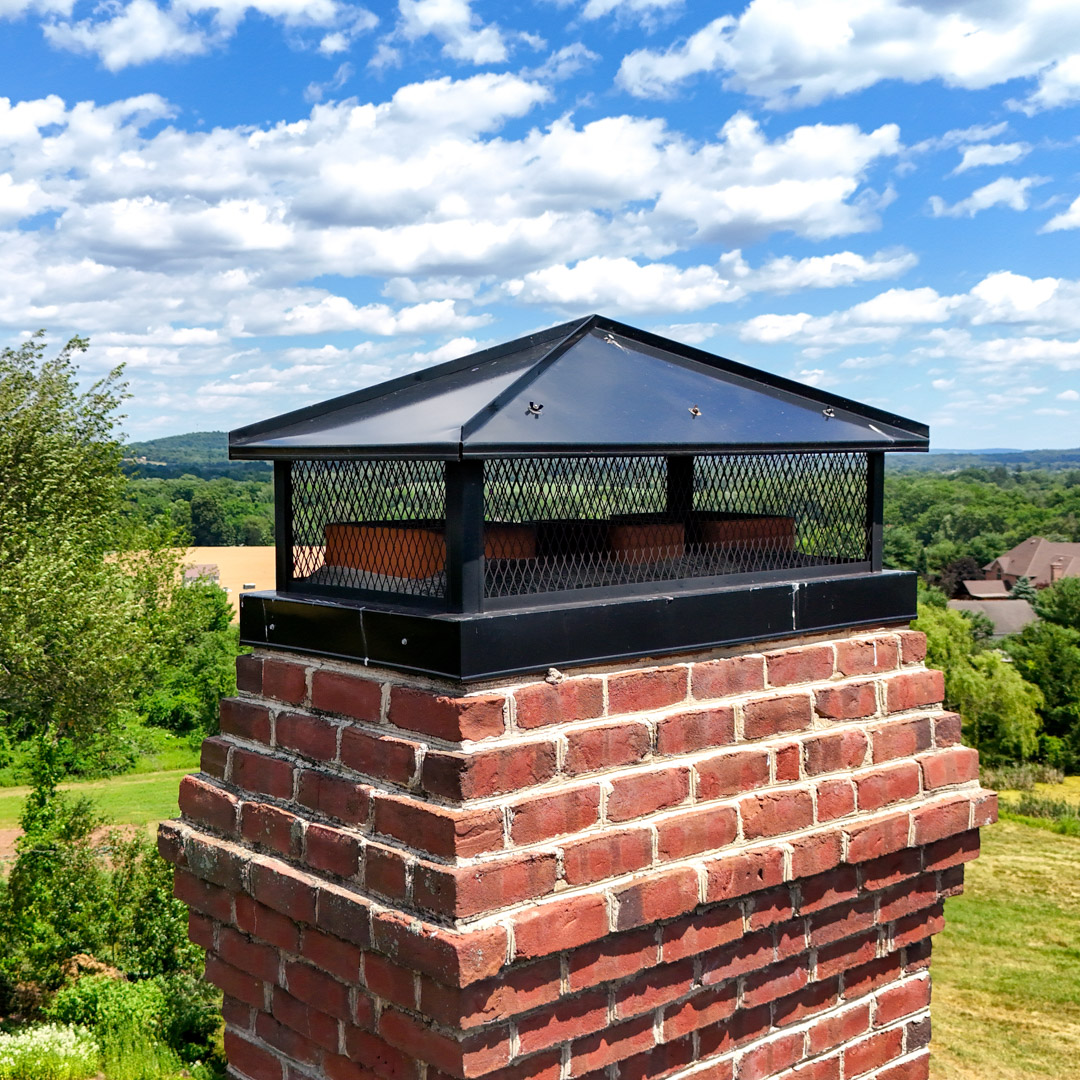
A chimney cap is a metal device that’s installed at the top of the chimney’s opening or flue. It typically includes a hood and a mesh screen, and its job is to protect the flue from the elements, like rainwater. Without a cap, rain can enter the flue, leading to moisture damage, rusted components, and liner deterioration.
The mesh screen prevents animals and debris from getting in. Birds, squirrels, raccoons, and leaves can easily get into the chimney if it’s uncapped. Once inside, critters build nests (or, unfortunately, die), which can block airflow and cause other issues.
Caps are small, inexpensive components that offer a ton of protective bang for the buck and are a must-have for your chimney.
What is a Chimney Crown?
Crowns are completely different from caps. Instead of a removable metal device, the crown is a permanent masonry structure that sits atop the chimney.
Crowns are typically made from concrete or mortar and are built around the base of the chimney flue. The job of the crown is to direct water away from the chimney’s structure. They’re built with a sloped surface that allows rainwater to run off rather than soak into the brickwork below.
Without a properly constructed crown, water can seep into the masonry. Over time, this moisture can cause bricks and mortar joints to crack, deteriorate, and break apart due to freeze-thaw cycles.
People mistake crowns for caps because they sit on top of the chimney, but they’re different. The crown protects the chimney structure, while the cap protects the flue opening.
Cracked or damaged crowns are common sources of chimney leaks. In many cases, repairing or rebuilding the crown is necessary to prevent extensive masonry damage.
What is a Chimney Cover
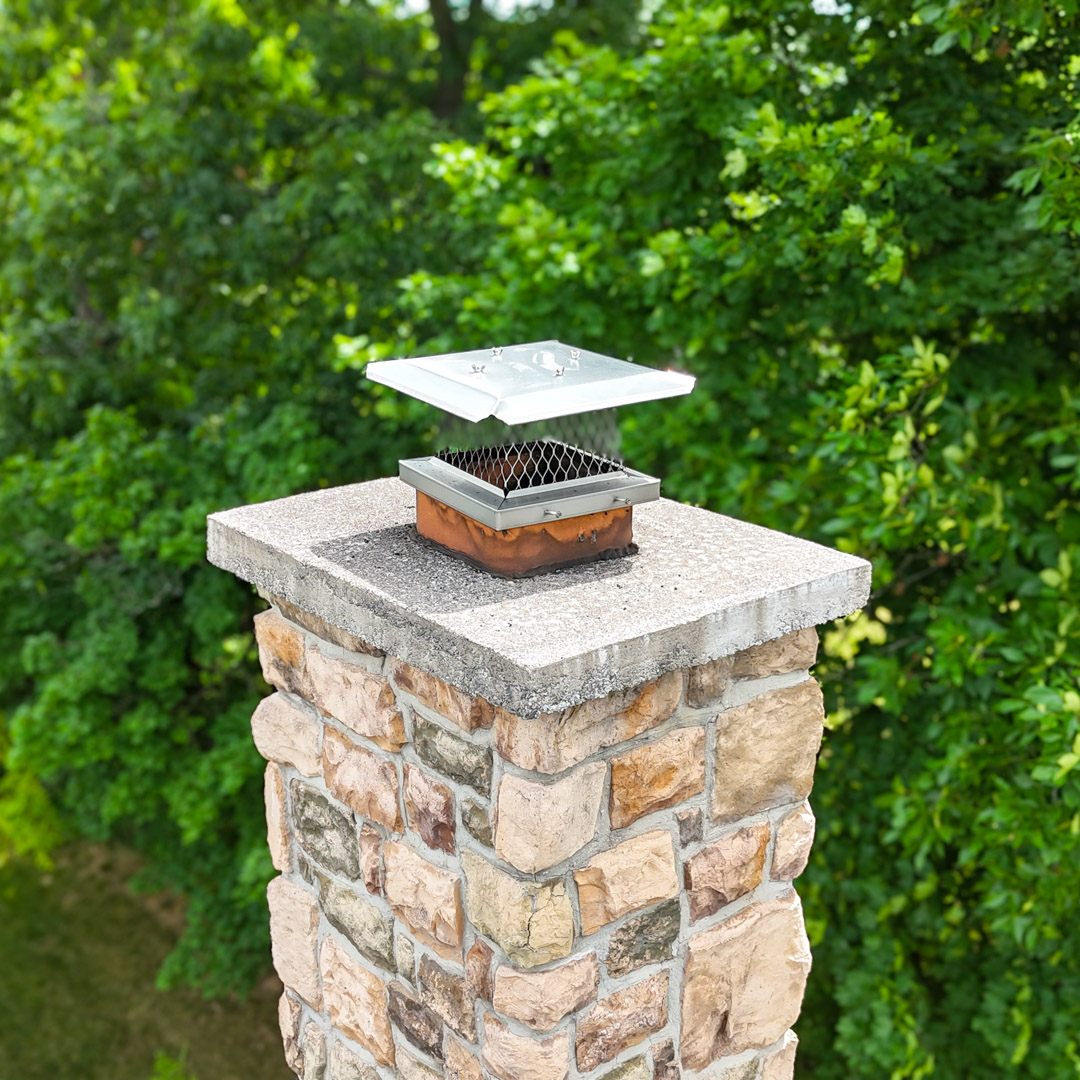
Chimney covers are a little confusing: sometimes they’re used as a general term for chimney caps, but in many cases, the term refers to a full-top chimney cover that protects the entire chimney structure.
Unlike a standard cap that covers only a single flue, a full-top cover spans the entire top of the chimney and is usually installed on chimneys with multiple flues. They work like a cap, but offer additional protection.
Full-top covers prevent water from entering around the flue openings and protect the crown from direct rain and snow. Because they cover the entire chimney top, they can significantly reduce moisture damage.
Covers can be made from stainless steel, aluminum, or copper and are custom-fitted to the chimney’s dimensions.
Do You Need All Three?
In most cases, yes. Each component protects a different part of the chimney. A well-protected chimney has a crown to protect the masonry structure, a cap or cover to protect the flue opening, and proper flashing and waterproofing to keep water out where the chimney meets the roof.
If one of these components is missing or damaged, moisture can seep in and wreak all kinds of havoc.
Call Horizon Chimney Services for Total Chimney Protection
Horizon Chimney Services is the go-to chimney and fireplace company in Eastern, MA, and RI. Whether you need a cap, cover, crown repair, chimney cleaning, inspection, or anything else, we’ve got you covered. Call us today or reach out online.